START WITH OLDEST POST AT BOTTOM
Monday, July 25, 2011
Courage
This is the Tomb of the Unknown Soldier in Arlington Cemetery. Courage is the cornerstone of military service and is integral to the dedication made by brave members of our armed forces. Everyone who joins the military has, by definition, met my standard for being courageous.
When we think about courage we realize it is not a lack of fear, nor is it foolish, risky, or reckless behavior. Courage involves a comprehensive understanding of the risks and dangers involved in a situation, and acting in spite of this knowledge. Courage by definition involves the pursuit of a noble and respectable cause, with the risk inherent in the undertaking.
This is one of those human traits that is best understood by virtue of example, as we find it difficult to appreciate courage without it being tangibly demonstrated. It is an infectious human trait: courageous people can often promote similar behavior in those around them. You see this kind of viral spread among people fighting for a common cause, and it certainly applies to those afflicted with serious illness. We become emboldened with courage by friends and family confronting disease. and find it easier to face our own battles.
Seems like you need more courage as you go through life. As we mature, there are statistically more things that might afflict us, and a strong defense mechanism is essential for a long life. We can all relate to what we thought were 'big deals' at a young age, and recognize later in life how insignificant and inconsequential our problems or challenges were at the time.
As the old adage goes: Old age and illness are not for sissies
PS Had chemo tx #4 of a planned total of 6 on 7/21/2011
Tuesday, July 12, 2011
Your Personal Red Line
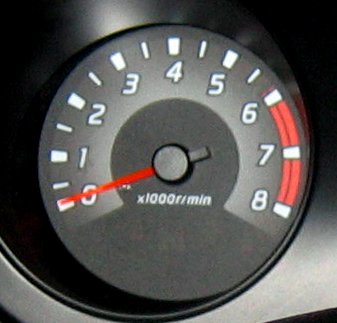
Yes I confess to being somewhat of a car geek, so the 'Red Line' analogy comes to mind-a tachometer has a red line denoting the maximum permissible engine speed. Yeah-I know-<insert groan here>
Just to be clear and before I digress, you will be grateful to know this post has nothing to do with cars. I just used the tachometer analogy since we all seem to relate to this graphic representation of maximum speed. The theme is that our Personal Red Line is an expression of the upper amount of emotional stuff we can handle, and this is set by the greatest challenge you've had to overcome in your life to date.
Your Personal Red Line is the limit of your ability to withstand emotional assault, and everyone's maximum is unique. One person's limit may be nothing more than a speed bump (sorry for the car analogy-it won't happen again) in the road for someone else. When we rally to combat a bigger foe than before, our Red Line is automatically redefined upwards, and there is a new upper set point of tolerable emotional strain. Something interesting happens as you mount bigger obstacles-you find that your mental strength and reserve for tackling the next challenge increases, just like exercise improves your physical stamina. A little counter-intuitive, as you might think that the bigger the emotional mountain to scale, the tougher it will be. It seems however that the emotional strength gained from the last success is proportionately larger than the next emotional challenge winds up being when you are forced to confront it.
The moral:You'll never shoulder a greater burden than you're able to handle.
Just to be clear and before I digress, you will be grateful to know this post has nothing to do with cars. I just used the tachometer analogy since we all seem to relate to this graphic representation of maximum speed. The theme is that our Personal Red Line is an expression of the upper amount of emotional stuff we can handle, and this is set by the greatest challenge you've had to overcome in your life to date.
Your Personal Red Line is the limit of your ability to withstand emotional assault, and everyone's maximum is unique. One person's limit may be nothing more than a speed bump (sorry for the car analogy-it won't happen again) in the road for someone else. When we rally to combat a bigger foe than before, our Red Line is automatically redefined upwards, and there is a new upper set point of tolerable emotional strain. Something interesting happens as you mount bigger obstacles-you find that your mental strength and reserve for tackling the next challenge increases, just like exercise improves your physical stamina. A little counter-intuitive, as you might think that the bigger the emotional mountain to scale, the tougher it will be. It seems however that the emotional strength gained from the last success is proportionately larger than the next emotional challenge winds up being when you are forced to confront it.
The moral:You'll never shoulder a greater burden than you're able to handle.
Monday, July 4, 2011
Chemo Update
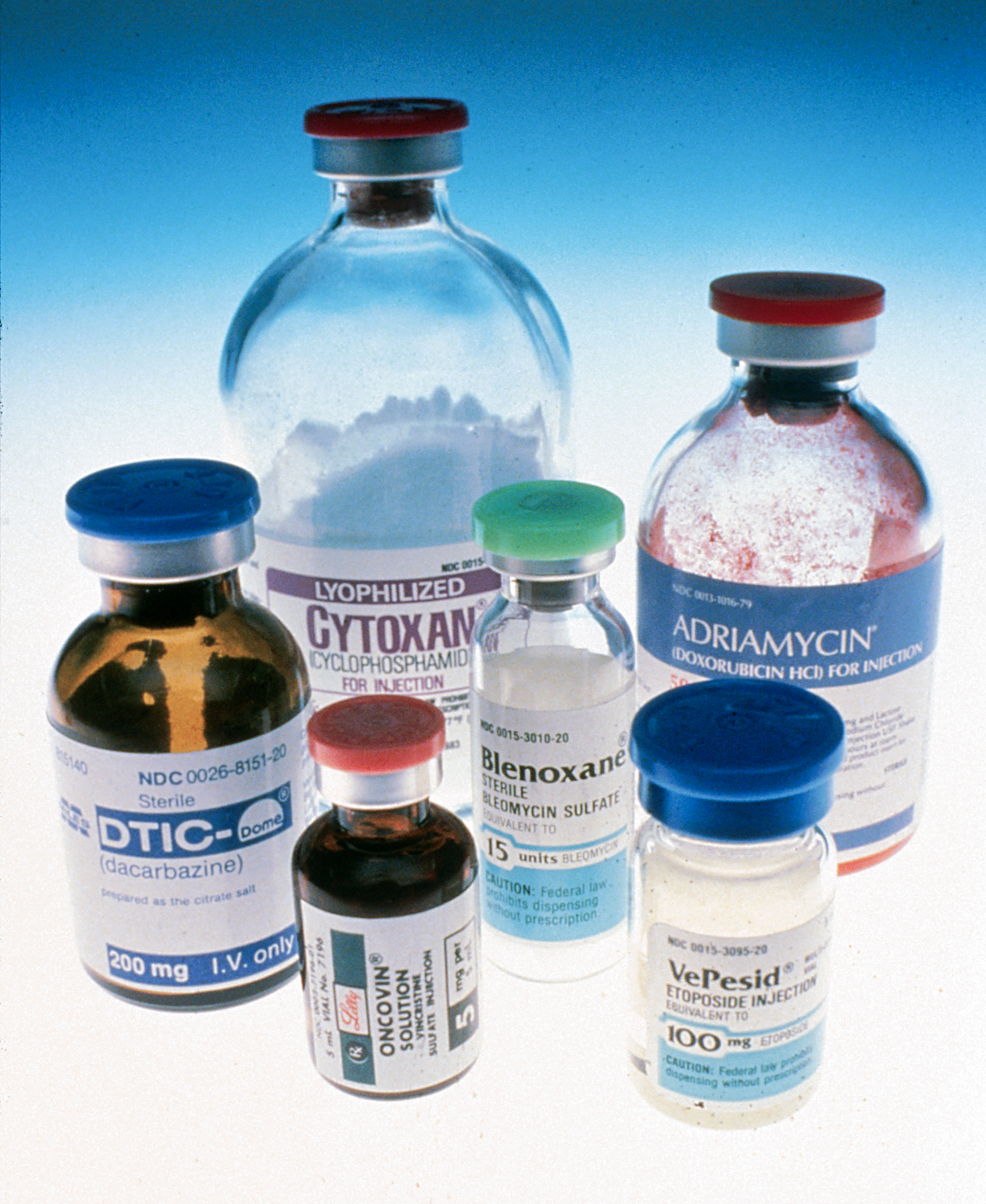
Photo left is a rendition of chemo pumps once you have been sedated, and on the right, some of the fun medications you are given.
UPDATE: I had chemotherapy session #3 on 6/30/2011 out of a planned total of 6. At the risk of repetition, the treatments are 3 weeks apart and the protocol is called 'R-CHOP 21'. Side effects to date haven't been too bad-hair loss is a given; there is a fair amount of numbness and tingling (paraesthesia) in finger tips that is a little annoying. Occasional nausea and what I'll refer to delicately as some gastrointestinal upset, but not bad. Seem to have managed to gain enough weight to slightly increase my chemo dosage, despite people asking how much I might have lost. I have tried to continue exercising, and perhaps this is just proof that muscle weighs more than fat. Talk about rationalizing...
Dr. Kaplan was very pleased with hematology results (white blood cell and platelets normal; hemoglobin still a little low but OK) and lymph nodes are substantially reduced in size. For anyone not familiar, hematology studies give information about red blood cells (hemoglobin=oxygen delivery to tissues), white blood cells (infection control), and platelets (involved in clotting and bleeding control).
The plan is still to do a stem cell transplant after the chemotherapy. In short this involves harvesting stem cells (the cells in the peripheral blood that can be used to repopulate the bone marrow after very powerful chemotherapy) and then treating with one last blast of major league chemo that pretty much wipes out the bone marrow in the process of annihilating any remaining cancer there. Dosages used can be 3-8X the normal chemo dose they are presently giving me. Apparently even if you are in clinical remission, there is typically often residual lymphoma in the bone marrow. The stem cell transplant allows one last 'mother of all chemotherapy' sessions and increases the likelihood of arriving at and staying in remission longer.
Thanks to all for your kindness and support and I will do my best to keep plowing forward.
UPDATE: I had chemotherapy session #3 on 6/30/2011 out of a planned total of 6. At the risk of repetition, the treatments are 3 weeks apart and the protocol is called 'R-CHOP 21'. Side effects to date haven't been too bad-hair loss is a given; there is a fair amount of numbness and tingling (paraesthesia) in finger tips that is a little annoying. Occasional nausea and what I'll refer to delicately as some gastrointestinal upset, but not bad. Seem to have managed to gain enough weight to slightly increase my chemo dosage, despite people asking how much I might have lost. I have tried to continue exercising, and perhaps this is just proof that muscle weighs more than fat. Talk about rationalizing...
Dr. Kaplan was very pleased with hematology results (white blood cell and platelets normal; hemoglobin still a little low but OK) and lymph nodes are substantially reduced in size. For anyone not familiar, hematology studies give information about red blood cells (hemoglobin=oxygen delivery to tissues), white blood cells (infection control), and platelets (involved in clotting and bleeding control).
The plan is still to do a stem cell transplant after the chemotherapy. In short this involves harvesting stem cells (the cells in the peripheral blood that can be used to repopulate the bone marrow after very powerful chemotherapy) and then treating with one last blast of major league chemo that pretty much wipes out the bone marrow in the process of annihilating any remaining cancer there. Dosages used can be 3-8X the normal chemo dose they are presently giving me. Apparently even if you are in clinical remission, there is typically often residual lymphoma in the bone marrow. The stem cell transplant allows one last 'mother of all chemotherapy' sessions and increases the likelihood of arriving at and staying in remission longer.
Thanks to all for your kindness and support and I will do my best to keep plowing forward.
Subscribe to:
Posts (Atom)